
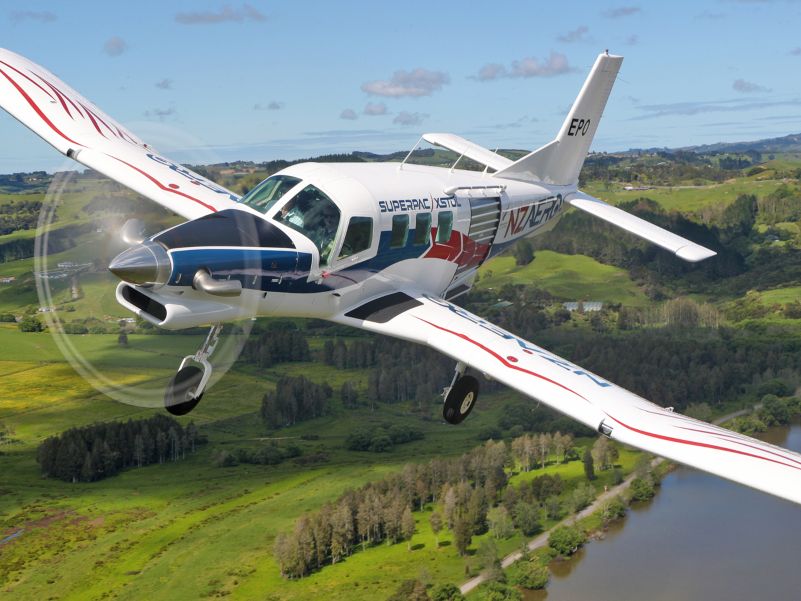
NZAero 750XL-II SuperPac
Considering a utility aircraft for remote or short-field operations?
Add the NZAero 750XL-II SuperPac to your mission assessment.
Choosing a utility aircraft is rarely about one headline specification. The right aircraft must work across your actual routes, payloads, runway conditions, operating environment and support expectations.
If you are evaluating aircraft such as the Kodiak 100, Cessna Caravan, Grand Caravan EX or other utility platforms, the New Zealand-built NZAero 750XL-II SuperPac deserves consideration where payload capability, short-field access, cabin flexibility and direct engagement with the aircraft manufacturer matter.
Before choosing your next aircraft, compare each option against the mission you actually need to fly.
Start with the mission - not the brand
Aircraft specifications provide a useful starting point, but headline figures do not tell the complete story. A meaningful evaluation should be built around the operating profile.
- What payload must be carried over the routes you actually fly?
- How much runway is available at the expected operating weight?
- Is the strip sealed, gravel, grass or otherwise unprepared?
- What temperature, elevation, obstacles and surface conditions apply?
- Will the aircraft carry passengers, freight or a combination of both?
- How easily can bulky freight, tools or mission equipment be loaded?
- What modifications or approvals are required for survey, medevac or special missions?
- What maintenance, technical support and parts supply will be available?
- How much capability will be used regularly - and how much is only needed occasionally?
NZAero assessment approach
NZAero can discuss the 750XL-II SuperPac against your own routes, loads and operating conditions rather than relying solely on generalised brochure figures. This helps turn a broad aircraft comparison into a practical mission-fit conversation.
Why the NZAero SuperPac should enter the conversation
The 750XL-II SuperPac is NZAero’s current XSTOL utility aircraft focus. It builds on the established 750XL platform, retaining the rugged, practical utility design while introducing a more powerful PT6A-140A engine, Hartzell four-blade propeller, updated glass cockpit, improved stall awareness, improved low-speed handling and engine trend monitoring.
For operators working in demanding environments, the NZAero SuperPac is positioned around practical utility: short-field access, payload capability, adaptable cabin use, pilot awareness and OEM support from NZAero in Hamilton, New Zealand.
Where the NZAero SuperPac may fit
- Remote access and utility operations where runway environment matters.
- Passenger, freight or mixed passenger-cargo operations.
- Skydiving operations requiring efficient lift capacity and aircraft turnaround.
- Aerial survey, mapping and other specialist mission profiles.
- Medevac or humanitarian operations subject to configuration and operational approval.
- Operators who value direct discussion with the aircraft manufacturer for configuration, support and mission assessment.
Performance should be assessed in context
Published performance figures are not always based on identical assumptions. Range, take-off, landing and payload figures can vary according to aircraft configuration, fuel reserves, atmospheric conditions, runway surface, altitude, temperature, pilot technique and installed equipment.
Optional equipment, tyres, interiors, mission systems and customer-specific modifications can also change the way an aircraft performs in practice.
Important comparison note
For a meaningful comparison, each aircraft should be assessed using the same mission profile and operating assumptions. Avoid comparing headline figures without checking the conditions behind them.
Mission profile example: high-altitude operations
NZAero has developed preliminary engineering analysis for a high-altitude operating profile at Mt Hagen, using 5,363 ft elevation, 28°C and maximum take-off weight. This type of scenario is useful because it reflects the kind of environment where aircraft fit cannot be judged by a single brochure figure.
In this preliminary SuperPac analysis, the 750XL-II showed improved take-off, climb and stated range performance when assessed against the established 750XL reference aircraft for that operating profile.
How to use this example
The value of the Mt Hagen profile is not that every operator will fly the same mission. It shows how aircraft performance should be assessed around the actual operating environment: elevation, temperature, aircraft weight, runway condition, terrain and mission requirements.
Preliminary engineering performance data. Subject to final validation and approval. Final published 750XL-II performance data should be confirmed against approved aircraft documentation and the customer’s specific operating profile.
Payload that remains useful in the real operation
Maximum payload and maximum range are rarely available on the same flight. A better question is: what can the aircraft carry over the distance you regularly fly, with the fuel reserves and operating conditions you require?
For an agricultural or pastoral operation, this may mean passengers, tools, parts and supplies. For a survey operator, it may mean sensor equipment, workstations, operators and mission fuel. For a charter or freight operator, it means understanding the revenue-generating load available on each route.
- Typical passenger numbers and freight weight.
- Fuel required for the route and reserves.
- Runway length, surface and available margins.
- Payload remaining after mission equipment or optional configuration items.
- Configuration changes needed between passenger, freight and specialist operations.
A cabin designed around the work
Cabin volume alone does not determine loading practicality. Door access, floor loading, internal shape, seating layout and the ability to change configurations can be equally important.
The 750XL-II SuperPac can be considered for passenger transport, freight and mixed passenger-cargo operations, aerial survey and mapping, surveillance and specialist missions, aeromedical configurations, skydiving, agricultural or pastoral support, and humanitarian or emergency response.
Configuration note
All configurations remain subject to applicable certification, operational approvals, weight and balance requirements, customer scope and availability of approved provisions.
For remote agricultural and pastoral operations
Remote agricultural and pastoral operations can present conditions where aircraft capability directly affects productivity. Long distances, short or unsealed airstrips, high temperatures, variable elevation and limited access to maintenance support all make mission fit important.
- Transporting people, tools, parts and supplies between properties and regional centres.
- Operating from short, remote or unsealed airstrips.
- Managing seasonal peaks where aircraft availability matters.
- Using one aircraft across multiple roles rather than a single fixed mission.
- Assessing support expectations before committing to an aircraft decision.
For large rural operators and pastoral groups, the 750XL-II should be considered on the basis of usable everyday capability, not simply speed or maximum range.
For aerial surveying and special missions
Surveying operators need to evaluate more than flight performance. The aircraft must also support the equipment, crew and certification required for the mission.
- Available payload after installing mission equipment.
- Cabin space for operators and workstations.
- Electrical generation and power requirements.
- Sensor ports, mounts and structural provisions.
- Endurance at the required survey speed and altitude.
- Stability, visibility and crew workflow.
- Cooling requirements for onboard equipment.
- Ease of reconfiguration between missions.
- Engineering and certification support.
NZAero’s in-house design and manufacturing capability allows customers to discuss aircraft and mission integration directly with the original manufacturer. Any proposed modification remains subject to engineering assessment, certification requirements and customer-specific scope.
How to compare options without relying on competitor numbers
When evaluating aircraft such as the Kodiak 100, Cessna Caravan, Grand Caravan EX or the 750XL-II SuperPac, avoid making the decision on isolated published figures alone. Instead, ask each option the same practical questions.
- Can the aircraft carry the required payload over the actual route?
- Can it operate from the available runway at the expected weight and conditions?
- Can passengers, freight or equipment be loaded practically?
- Can the aircraft be configured for the mission without excessive complexity?
- What support, parts and technical assistance are realistically available?
- What assumptions sit behind the published performance information?
- What is the whole-life value for the operation, not just the acquisition decision?
The best choice will depend on what the aircraft must accomplish in your operation. NZAero can help assess where the 750XL-II SuperPac may fit - and where another solution may be more suitable.
Let us compare the aircraft against your mission
Send NZAero your typical operating profile so our team can assess how the 750XL-II SuperPac fits your requirements and provide relevant information for further evaluation.
- Primary application.
- Current aircraft.
- Typical payload.
- Passenger numbers.
- Departure and destination.
- Available runway length.
- Runway surface.
- Airport elevation.
- Typical temperature.
- Required fuel reserve.
- Special equipment or configuration.
CTA button: Assess My Mission
Speak with NZAero about the 750XL-II
FAQ
Compare the aircraft against the mission: payload, route, runway surface, elevation, temperature, fuel reserve, configuration, support and whole-life value. Headline figures are useful, but they should be assessed against consistent operating assumptions.
It may be considered by buyers evaluating utility aircraft for payload, short-field access, operational flexibility and mission suitability. The appropriate aircraft depends on the buyer’s actual mission, operating conditions, support expectations and commercial case.
Use the same mission profile for each option. Assess route, payload, runway length, runway surface, elevation, temperature, aircraft weight, fuel reserve and required configuration rather than comparing isolated brochure figures.
The 750XL platform was developed for demanding utility operations and short-field access. Suitability for a particular airstrip depends on runway length, surface, elevation, obstacles, temperature, aircraft weight and applicable operating requirements.
The 750XL-II SuperPac may be considered for survey and special missions requiring payload, cabin space and equipment integration. Specific sensor installations, structural changes, electrical requirements and certification pathways must be assessed by NZAero’s engineering team.
Available configurations and mixed-load capability depend on the approved aircraft configuration, seating arrangement, weight and balance, and relevant operating regulations. NZAero can assess the configuration required for a customer’s mission.
The 750XL-II SuperPac is manufactured by NZAero in Hamilton, New Zealand. NZAero provides aircraft design, manufacturing, engineering and OEM support from its Hamilton Airport facility.